- The Baking Sheet
- Posts
- The Baking Sheet - Issue #289
The Baking Sheet - Issue #289
Introducing the The Tezos Baking Portal.

Happy New Year, Tezos community.
As the calendar flips into January, this week’s Baking Sheet lands in a familiar in-between moment. The holidays are just behind us, announcements are starting to wake up again, and the rhythm of the ecosystem is slowly finding its pace after a short winter pause.
This week’s edition reflects that transition. There’s a new resource for bakers going live, a chance to look back at how much ground Tezos covered in 2025, and a snapshot of Etherlink’s steady progress as the year closed out. Nothing rushed, nothing overstated, just a clear view of where things stand as we step into the year ahead.
Let’s get into it.
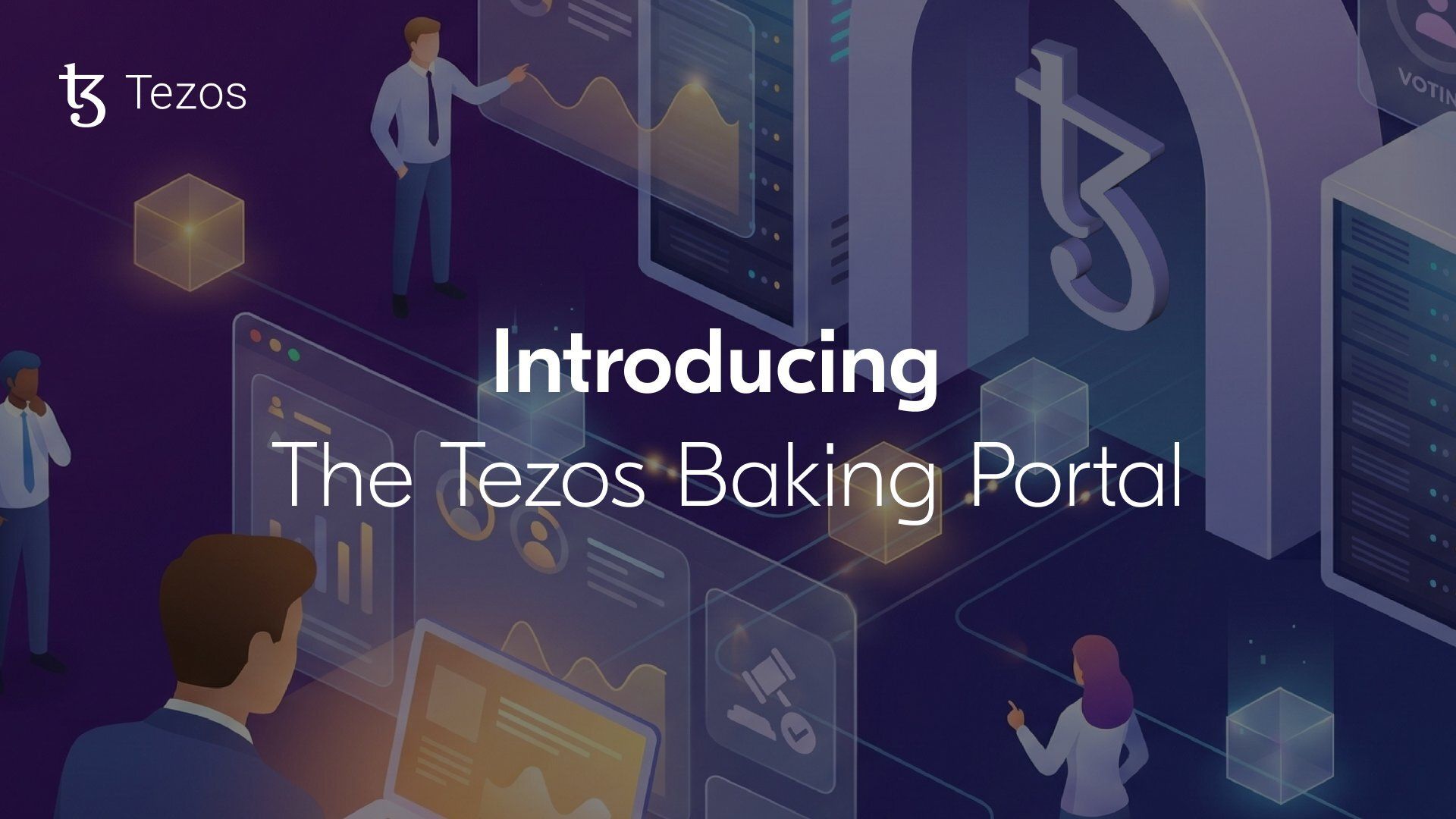
The Baking Portal Is Now Live
As the ecosystem eases back into motion after the holidays, one of the most practical updates to land this week is the launch of the Baking Portal. It is a new home for bakers and aspiring bakers that brings together the information you actually need to run operations on Tezos, without hopping between docs, forums, and tooling pages.
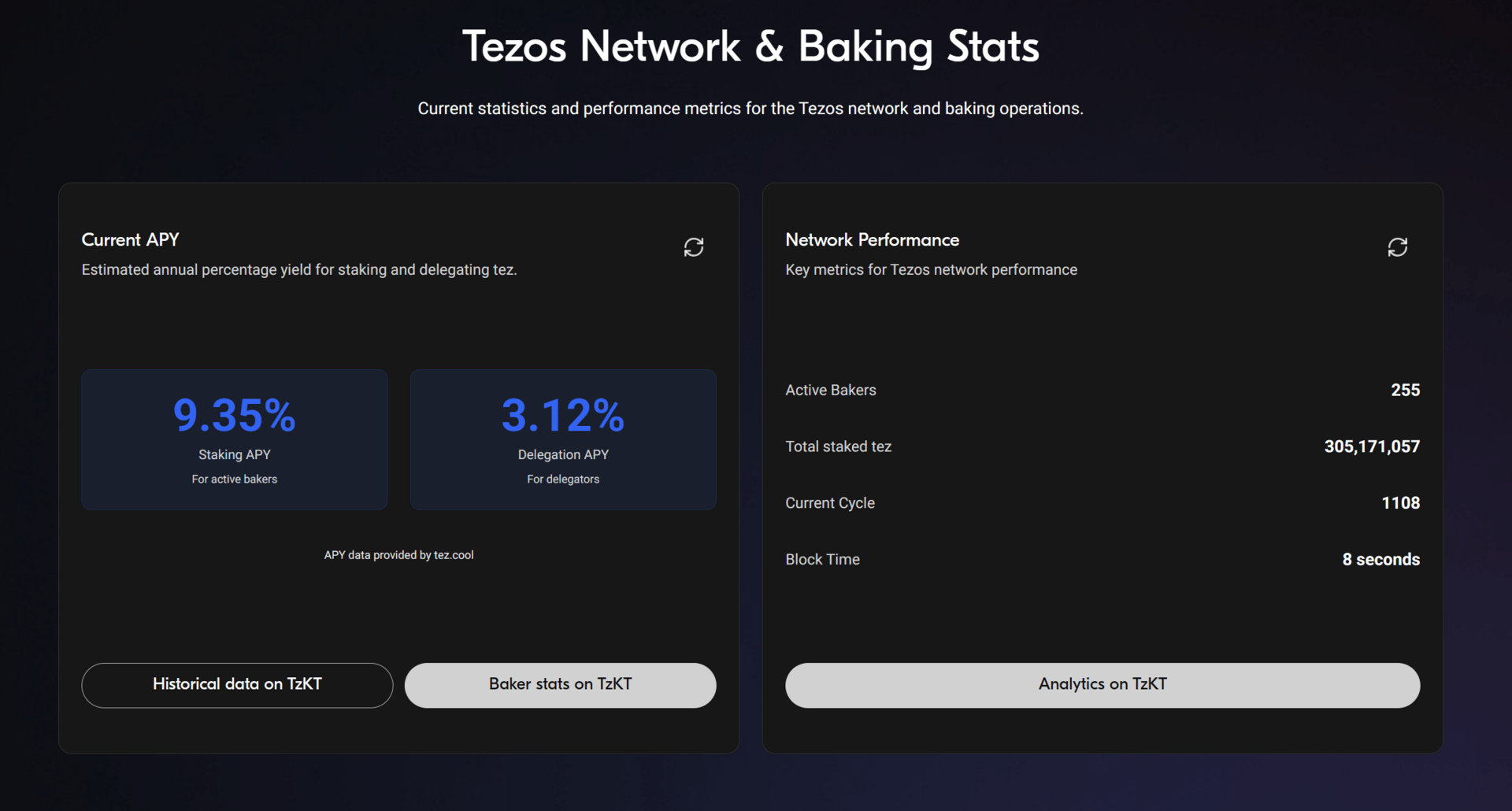
The portal pulls network data, setup guidance, and operational best practices into one place. Right up front, the portal gives a live snapshot of the network. You can see current baking and delegation APY, active baker counts, total staked tez, cycle numbers, and block timing, all contextualized with links to deeper analytics on TzKT. It is a quick pulse check on how Tezos is operating right now, not abstract theory.
From there, it moves into the practical side of baking. The setup section walks through deployment options, key management choices, hardware expectations, software installation, and monitoring. These are the questions bakers spend the most time solving, and having them structured in one place makes the process far less fragmented. There is also dedicated coverage of testnets, so bakers can experiment, rehearse upgrades, and validate changes before touching mainnet.
Governance gets its own clear overview as well. The portal explains how proposals move through the on chain process, how voting periods work, and where discussion happens. For anyone participating in governance, this section ties together the mechanics with the places where decisions are actually debated and made.
Finally, the portal includes a curated directory of tools that bakers already rely on. From baking software and payout automation to explorers, snapshots, and analytics platforms, it acts as a practical reference rather than an exhaustive list.
This launch feels well timed. As activity ramps back up in January and governance cycles pick up pace, having a single, maintained entry point for baking operations lowers friction for both new and experienced participants.
The Baking Portal is live now at bakers.tezos.com, and feedback is encouraged. It is clearly designed to evolve alongside the network, shaped by the people who actually keep Tezos running week after week.

Tezos 2025: A Year That Delivered, Then Kept Going
With the Baking Portal now live, it’s a good reminder of how much practical infrastructure Tezos has quietly put in place. Tools like this don’t appear overnight. They’re the result of years of iteration, upgrades, governance cycles, and people showing up week after week to improve how the network works.
Which makes this a fitting moment to zoom out.
As we move through the first days of January, it’s worth taking a step back and looking at what 2025 actually delivered for Tezos. Not just in isolated announcements, but as a full year shaped by protocol upgrades, ecosystem growth, real-world usage, and a community that kept building even when the spotlight moved elsewhere.
Here’s a look at some of the moments that defined Tezos in 2025.
Protocol upgrades that kept raising the bar
The year opened with Quebec, activated in January, bringing faster Layer 1 performance with 8-second blocks and 16-second finality. It also introduced Adaptive Issuance, a shift in staking economics designed to better align security with real participation as the network scales.
In May, Rio followed. Cycles moved to one day, making staking operations more flexible, participation rewards began supporting the Data Availability Layer, and clearer inactivity rules helped keep the network resilient as activity increased.
By September, Seoul was live. Native multisig accounts strengthened shared custody, aggregated attestations improved efficiency across consensus, and automatic finalization made unstaking simpler and safer for everyday users.
Alongside these upgrades, the Data Availability Layer shipped, opening the door for data-intensive applications on rollups without sacrificing decentralization or cost efficiency. It was one of those foundational changes that quietly expands what builders can do next.
TezDev, meetups, and showing up in person

July brought TezDev 2025 to Cannes during EthCC week. A full day of talks, demos, and deep dives covered Tezos X, smart rollups, developer tooling, real-world assets, gaming, and digital art, anchored by a keynote from Arthur Breitman and teams from across the ecosystem.
Beyond Cannes, Tezos builders and community members showed up throughout the year at events like ETHDenver, Token2049, WebX, and Devcon. At the same time, Tezos Breakfast Club meetups kept things grounded and local, centered around coffee, conversations, and builder-to-builder exchanges led by Tezos Trailblazers.
Real-world assets moved from idea to reality

One of the clearest signals of maturity in 2025 came from real-world assets. Uranium.io brought physical uranium on-chain through xU3O8, pairing regulated custody with on-chain settlement.
The year saw tokenized access to physical uranium, the world’s first on-chain uranium spot price feed, and USDC borrowing enabled using xU3O8 as collateral. Liquidity expanded through multiple exchange listings, showing how tokenization can unlock practical utility in markets that previously felt out of reach.
Etherlink found its stride

2025 was also a defining year for Etherlink. A sequence of kernel upgrades including, Calypso, Dionysus, Ebisu, and Farfadet steadily improved performance, scalability, and EVM compatibility.
DeFi activity grew meaningfully. Apple Farm incentives helped push TVL to an all-time high above $80 million, while core protocols expanded liquidity and on-chain usage. Governance took a major step forward too, with the first community-led election of a sequencer operator and record participation in later upgrade votes, including Etherlink 6.1.
Builders also gained access to Google Cloud Web3 credits, helping teams unlock infrastructure and go-to-market support as projects matured.
Games kept shipping, art kept traveling

Gaming continued to move from promise to practice. Titles like Sugarverse and AppleVille showed how active communities and EVM-native tooling on Etherlink can onboard new players while keeping gameplay front and center.
Art remained one of Tezos’ strongest cultural signals. Throughout 2025, art on Tezos appeared at fairs, museums, festivals, and conferences around the world. At the same time, infrastructure expanded with new platforms such as EditArt, Infinite Ink, DropDot, Bootloader, and Zero Unbound.

Arthur Breitman spent the year taking Tezos to global stages, from Cannes, Philidelphia, to Consensus and beyond, sharing where the network is headed and why long-term design choices still matter.
Community work that compounded

Across the year, Tezos Commons focused on consistency. The Baking Sheet and Tezos Today newsletters crossed 100,000 subscribers combined. Over 100 articles reached more than 170,000 views across platforms. TezTalks passed 4 million total views, giving builders and artists space to explain their work in depth.
Behind the scenes, infrastructure quietly scaled too. More than 10 billion RPC requests were served to wallets and indexers, and the Tezos Community Rewards Program distributed over 50,000 tez across the year to recognize people who kept showing up.
The numbers tell their own story

By the end of 2025, Tezos recorded 42.5 million transactions for the year, averaging around 117,000 per day. More than 16,000 smart contracts were originated, NFT activity remained culturally strong, bridge volume passed $900 million, and governance continued to run smoothly with every proposal reaching quorum.
None of this happened overnight. It came from steady iteration, open governance, and a community that stayed engaged even when the spotlight moved elsewhere.
As we head into 2026, this roundup feels less like a victory lap and more like a foundation. The work done in 2025 quietly expanded what Tezos can support next. And if the past year showed anything clearly, it is that this ecosystem knows how to keep building, together.
Thanks to the bakers, builders, artists, collectors, organizers, and everyday participants who made 2025 what it was.
This Week in the Tezos Ecosystem
Etherlink Fortnightly Wrap: Edition #14
Late December is usually when things slow down. Fewer announcements land, timelines thin out, and attention drifts toward the holidays. On Etherlink, though, the work kept moving quietly in the background, with maintenance, fixes, and steady usage continuing without much noise.
The most important moment in this window was the successful activation of Etherlink 6.1, a fast governance upgrade that resolved an issue affecting FA token deposits.
What happened:
The Farfadet (6.0) upgrade introduced a regression that prevented some FA token deposits from finalizing on Etherlink
Withdrawals continued to work, but affected deposits never completed
The bridge frontend was temporarily disabled to prevent new deposits from getting stuck
How it was resolved:
Etherlink 6.1 was proposed as a targeted kernel fix
The upgrade restored normal FA deposit delivery
A one-time migration reprocessed previously stuck transfers
The proposal reached quorum, passed promotion, and was activated within the same window
With 6.1 live, FA deposits resumed normally and affected users received their tokens on-chain.
Beyond protocol maintenance, more ecosystem activity continued to move directly onto Etherlink.
Ecosystem integrations:
Sogni.ai migrated execution of its Season 5 staking program fully to Etherlink
Staking transactions now run natively on the network
Users continue staking through the same interface, with bridging handled automatically in the background
Governance participation also stood out during this period.
Governance highlights:
The 6.1 promotion vote set new participation records for a fast upgrade
29 bakers took part
27.24% of the total voting power was represented
A clear signal that bakers show up when fixes matter
Day-to-day usage across applications remained steady, even without headline-driven activity.
Projects in focus:
Hanji continued to see consistent spot trading via its on-chain order book, enabled by fast finality and low transaction costs
Superlend remained active as a venue for supplying, borrowing, and managing vault-based strategies, with users adjusting positions rather than chasing short-term incentives
Nothing here arrived as a splashy announcement, and that’s kind of the point. These weeks were about keeping the network healthy, fixing what needed fixing, and letting real usage continue quietly. The next wrap will pick up from there.
🔴 Now Streaming: Working With People in Tezos | A Conversation With Ion (Islam)
This week on TezTalks Radio, host Brandon Langston is joined by Islam, Community Manager at Trilitech, for a thoughtful conversation about responsibility, judgment, and the emotional reality of working closely with people.
Before entering the Tezos ecosystem, Islam seriously considered a career in medicine. That interest in care, responsibility, and human impact never disappeared. It simply found a different place to live. In this episode, we explore how those values translate into community work, where decisions matter, clarity is essential, and there is rarely a script to follow.
Watch the full episode on YouTube.