- The Baking Sheet
- Posts
- The Baking Sheet - Issue #291
The Baking Sheet - Issue #291
Etherlink gets 10x faster with instant confirmations.

Welcome to this week’s edition of The Baking Sheet!
This week reflects that return to momentum. We look at Etherlink taking a meaningful step forward with instant confirmations and rising network activity, and we turn our attention to Tallinn as bakers and operators prepare for the next protocol upgrade later this month.
Beyond the headlines, we also spend time in the arts and events corner of the ecosystem, where long-term partnerships and in-person meetups continue to anchor Tezos in real communities and real places.
There is also one more thing we wanted to exclusively share first with our subscribers as you scroll down to the end of the newsletter so without further adieu, let’s get into it.
Etherlink Enters Real-Time Mode
Starting off this week, the pace on Etherlink has literally accelerated over the past few weeks, and this one feels different. What started as steady network growth has now crossed into something you can actually feel when you use it.
Instant Confirmations are now live on Etherlink, cutting confirmation latency from roughly half a second to under 50 milliseconds. Instead of waiting for the next block, users receive a transaction receipt the moment the sequencer commits to including it. The result is on-chain interactions that finally behave like real-time systems, not just fast ones.
That change matters more than it might sound. Sub-50ms confirmations dramatically shrink the risk window for DeFi trades, enable tighter spreads for market makers, and remove the awkward pauses that break immersion in games and interactive apps. For developers, it also means cleaner application logic. No polling, no guesswork, just immediate feedback when something executes.
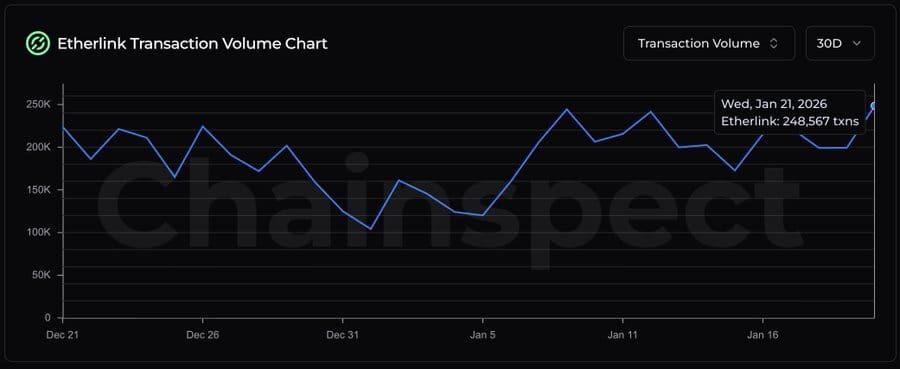
This performance leap is already showing up in the numbers. Etherlink recently crossed 248,000 transactions in a single day, the highest activity level the network has seen in the past month. Usage is trending upward, and the timing lines up neatly with Instant Confirmations becoming available to builders and users alike.
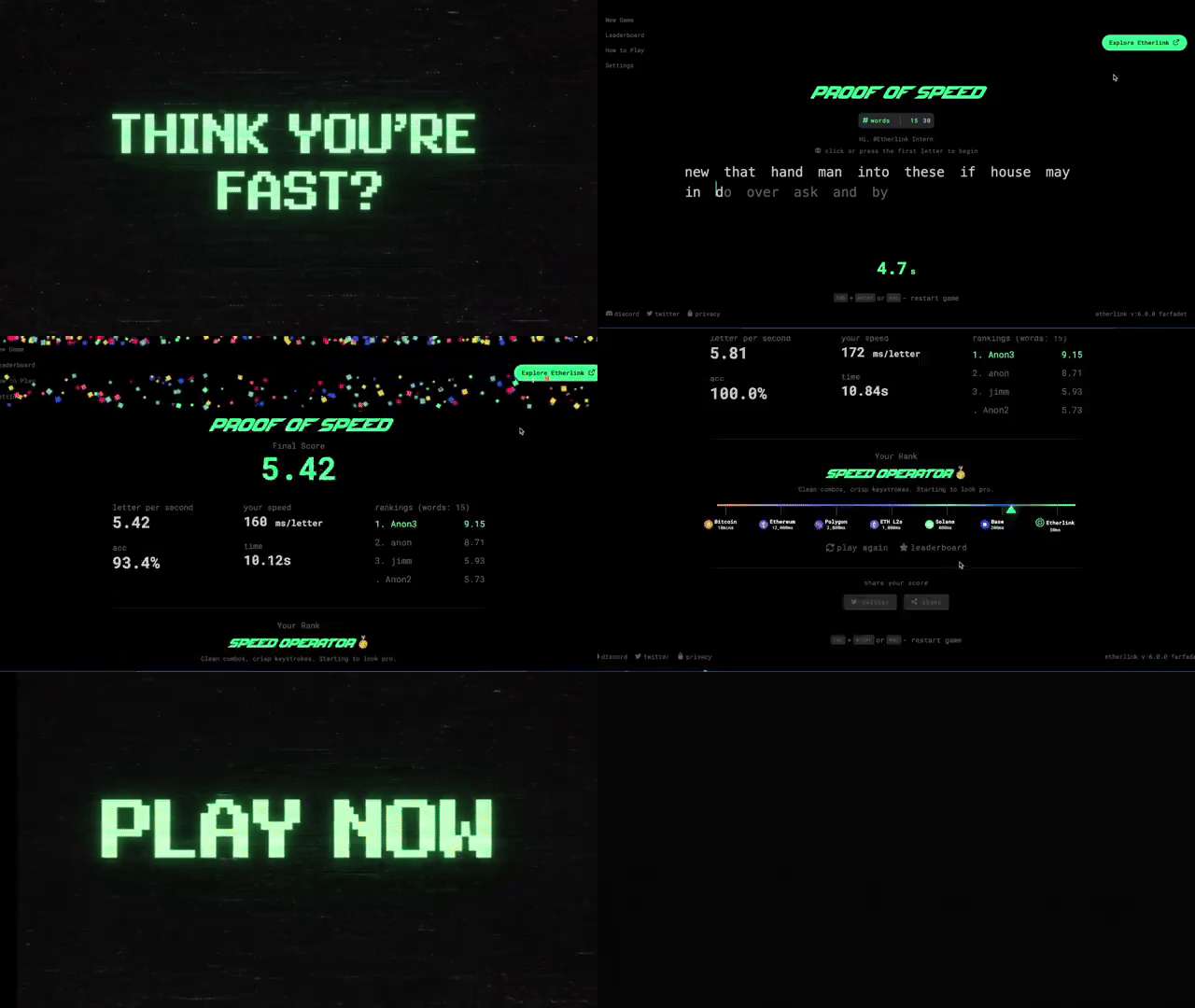
Additionally, if you want to see the speed difference for yourself, there’s a playful way to do it. Proof of Speed lets you race your typing against Etherlink’s new confirmation times. Blink and you’ll miss it, but that’s the point.
Under the hood, this is more than a UX upgrade. Instant Confirmations give applications early, deterministic inclusion guarantees without changing Etherlink’s finality model. Full block confirmation still follows shortly after, but for most real-time use cases, that first commitment is enough to unlock entirely new design space. I know a lot of you love to ‘monitor the situation’ and Etherlink has a solution for that. You view the transactions taking place at lightning speed in real time here.
Between faster confirmations and rising transaction volume, Etherlink is starting to look less like “another fast rollup” and more like infrastructure that’s ready for latency-sensitive DeFi, games, and payment systems at scale. If this is the baseline heading into the rest of January, it sets a strong tone for what’s coming next.
Preparing for Tallinn on January 24
As Etherlink pushes deeper into real-time territory, attention is also turning back to Layer 1. That timing is not accidental. Earlier this week, Nomadic Labs shared a detailed post on Tezos Agora outlining how bakers and node operators can prepare for the upcoming Tallinn protocol upgrade.
Tallinn is scheduled to activate at the end of cycle 1123, just before block 11,640,289, which is currently expected around Saturday, January 24, 2026 at 15:25 GMT. As always, exact timing may drift by a few hours as operators update their infrastructure.
The upgrade continues Tezos’ long-running focus on performance, operational simplicity, and long-term scalability. Like recent upgrades before it, Tallinn introduces changes that require some preparation on the node and baker side, alongside protocol-level improvements that benefit the entire network once live.
What Tallinn Brings
Developed by Nomadic Labs, TriliTech, and Functori, Tallinn builds directly on the path set by Paris, Quebec, Rio, and Seoul. The headline changes are straightforward, but meaningful.
• Six-second block time
Layer 1 block time drops from 8 seconds to 6, delivering lower latency and faster finality across the network.
• All bakers attest every block
Once at least 50 percent of bakers adopt tz4 consensus keys, every baker will attest in every block. This strengthens security, reduces node load, and makes attestation rewards more predictable.
• Address Indexing Registry
A new global registry stores addresses once and reuses compact numeric identifiers. For Michelson contracts, especially large ledgers and NFT collections, this can reduce storage needs by 50 to 100 times.
Together, these changes improve throughput, reduce long-term storage growth, and simplify the consensus path without raising hardware requirements.
Octez v24 Upgrade
Preparing for Tallinn means upgrading to Octez v24. The minimum requirements remain accessible:
• 3 CPU cores on arm64 or amd64
• 8 GB RAM plus 8 GB RAM or swap
• 100 GB SSD storage
• Reliable, low-latency internet connection
Octez v24 supports the Tallinn protocol, deprecates protocol-specific baker and accuser binaries, and includes several internal cleanups. Binaries and packages are available on the new Octez releases page, with full instructions in the Octez v24 announcement.
One important operational note has been flagged for awareness. Running a DAL node via octez-baker run dal is not supported in Octez v24. Bakers should use octez-dal-node instead. Anyone already running a standalone DAL node does not need to change their setup.
A Note on tz4 and Baker Attestations
Some bakers have raised concerns about tz4 readiness. Nomadic Labs emphasized that no baker is left behind.
The all-bakers-attesting feature only activates once 50 percent of bakers adopt tz4 consensus keys. This is measured by baker operations, not stake share. Baking from tz1, tz2, or tz3 addresses remains fully supported, and only the consensus key needs to be tz4. Manager keys and public addresses can stay the same.
Once enabled, the feature remains active even if adoption later dips.
Test Ahead of Activation
Bakers and node operators are encouraged to test their setups on Shadownet and Tallinnnet ahead of mainnet activation. Seoul has already been successfully activated on Shadownet, giving teams a stable environment to validate upgrades and workflows.
With Instant Confirmations pushing Etherlink forward and Tallinn lining up as the next Layer 1 step, the picture coming into late January is a familiar one for Tezos. Careful preparation now, smoother performance later, and another upgrade that lands without disruption.
If you are baking or running infrastructure, now is the moment to review, test, and get ready!
This Week in the Tezos Ecosystem
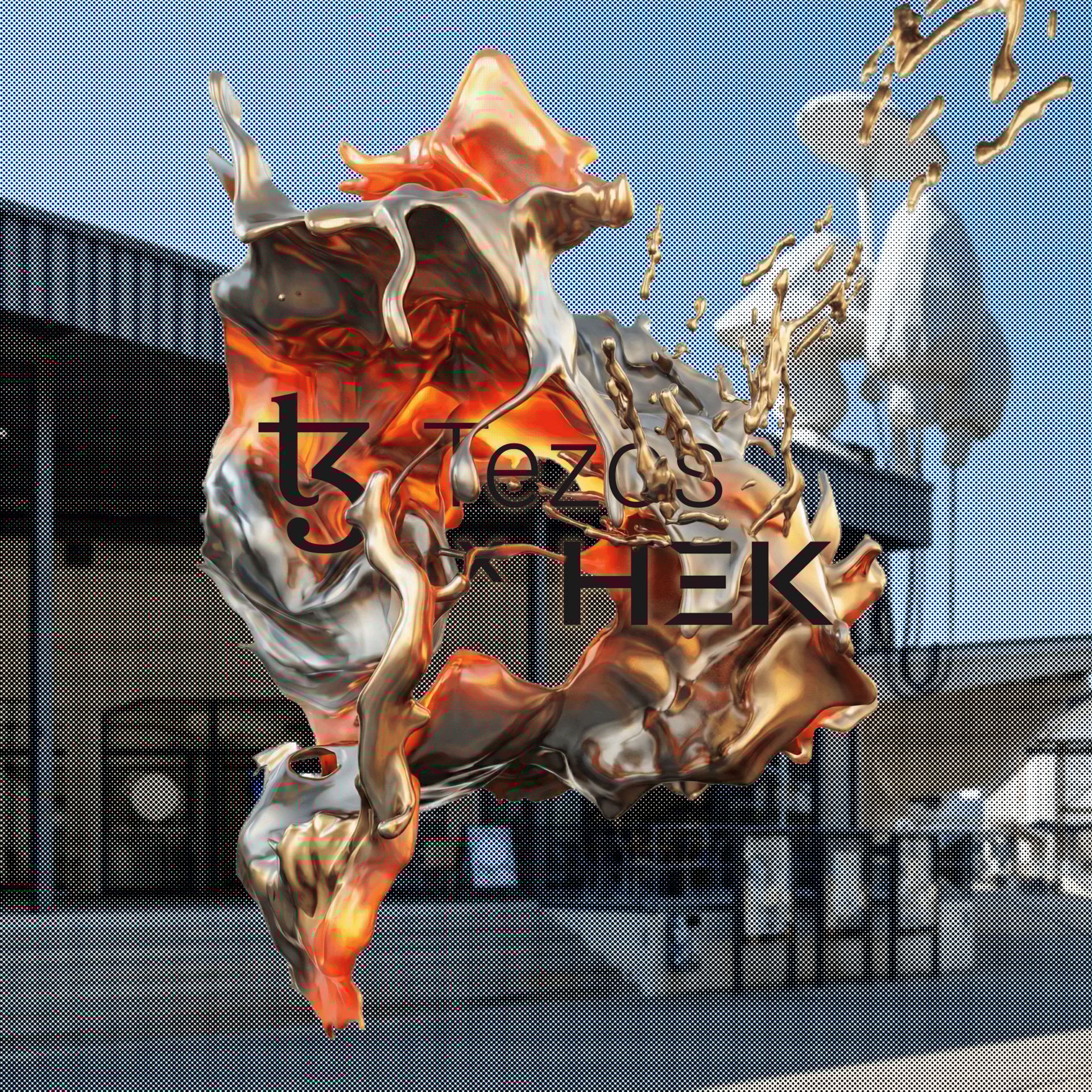
Tezos and HEK Basel Commit to a Year of Digital Art in 2026
As protocol work and infrastructure upgrades continue to move steadily forward, Tezos’ long-standing relationship with the art world is also deepening in a more deliberate way. This week, the Tezos Foundation and HEK Basel announced a year-long partnership focused on presenting, teaching, and preserving blockchain-based art throughout 2026.
The collaboration builds on a relationship that began in 2022, when HEK publicly committed to collecting and exhibiting digital artworks using blockchain infrastructure. What makes this announcement stand out is its long horizon. Rather than a single exhibition or short-term activation, the program spans an entire year and is structured around exhibitions, education, and professional training.
A Program That Moves Between Virtual and Physical Space
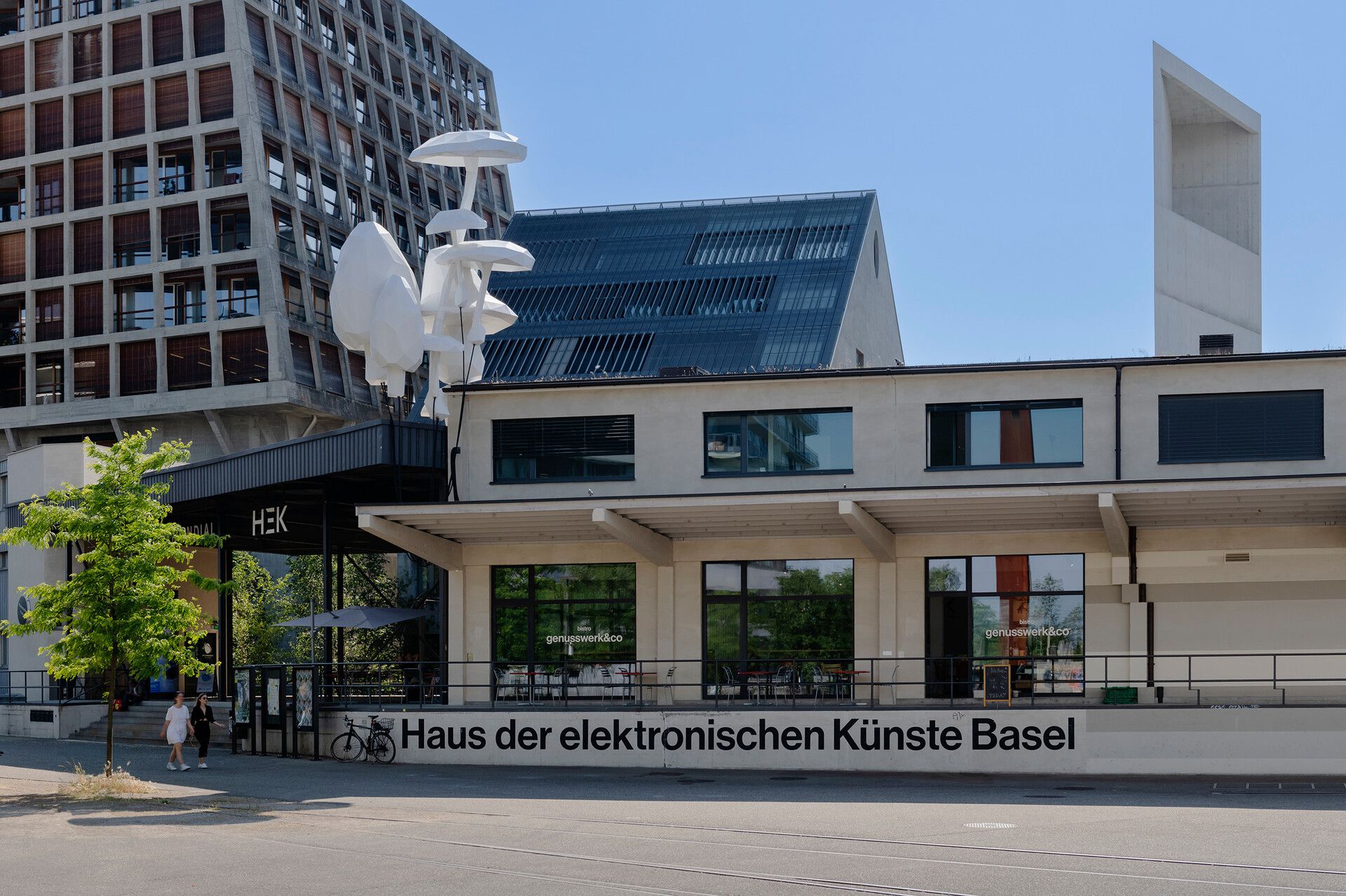
The 2026 program will center on three major exhibitions. Two will take place on HEK’s virtual.hek platform, while a third will be presented outdoors in Basel during Art Basel 2026. Together, they aim to meet audiences where digital art already lives, both online and in public spaces.
Three curators will oversee the programming, with the virtual exhibitions featuring at least six artists working across digital and blockchain-based practices. The works will be released through objkt, keeping the distribution native to the Tezos art ecosystem while remaining accessible to a global audience.
Sabine Himmelsbach, Director of HEK, described the collaboration as an opportunity to expand both curatorial and technical possibilities. By involving guest curators and operating across virtual and physical platforms, the program opens space for international perspectives and more experimental forms of media art.
Education, Access, and Preservation

Beyond exhibitions, the partnership places strong emphasis on education and long-term stewardship. HEK will install an on-site kiosk in its Basel venue, allowing visitors to explore the virtual exhibitions directly within the museum and learn about blockchain-based art in a hands-on way. Workshops will introduce audiences to NFTs, digital ownership, and on-chain practices without assuming prior technical knowledge.
On the professional side, the collaboration supports deeper work around preservation. Through HEK’s leadership within the EU COST Action European Media and Born-Digital Art Conservation and Knowledge Network, the partnership will contribute to an international training school on NFT preservation hosted at ZKM Center for Art and Media in Germany. This focus on conservation reflects a growing recognition that digital art needs not only platforms for display, but robust frameworks for long-term care.
Aleksandra Artamonovskaja, Head of Art at Trilitech, framed the partnership as part of a broader commitment to sustained museum programming and education. Rather than treating blockchain as a novelty, the collaboration aims to strengthen institutional foundations so artists working with technology can build careers that last.
A Familiar Pattern, Extended Further

This announcement fits into a wider pattern of institutional engagement across the Tezos ecosystem. The Foundation’s previous collaborations with Musée d’Orsay, Serpentine, and LAS Foundation helped establish blockchain-based art within respected cultural contexts. The HEK partnership extends that work by committing time, resources, and curatorial attention over an entire year.
At a moment when much of the ecosystem conversation is focused on speed, scalability, and tooling, this collaboration is a reminder that Tezos continues to invest just as intentionally in the cultural layer. Infrastructure may make things possible, but long-term programs like this are what allow digital art to be studied, preserved, and taken seriously well beyond the moment of minting.
Events
Big conference days tend to start fast, and ETHDenver is no exception. To make the morning a little easier, the Tezos Breakfast Club is back with a relaxed meetup designed to fuel conversations before the day gets busy.
If you skipped the hotel breakfast or just want a familiar place to land, this is a low-key stop for the Tezos community to connect over coffee and pastries before heading into the conference.
What to Expect
Complimentary coffee and fresh baked goods
Casual conversations about Tezos, Etherlink, and what people are building
Exclusive giveaways for attendees
A friendly starting point to ease into the ETHDenver schedule
The Breakfast Club is meant to stay simple. No panels, no presentations, just a chance to catch up with builders, artists, and ecosystem teams in a comfortable setting.
Event Details
Location: The Wild, 1660 Wynkoop St Suite 100, Denver, CO
When: During ETHDenver week
Registration: Spots are limited, so early sign-up is recommended
Grab a coffee, grab a pastry, and start your ETHDenver week with good conversations and familiar faces.
One More Thing…
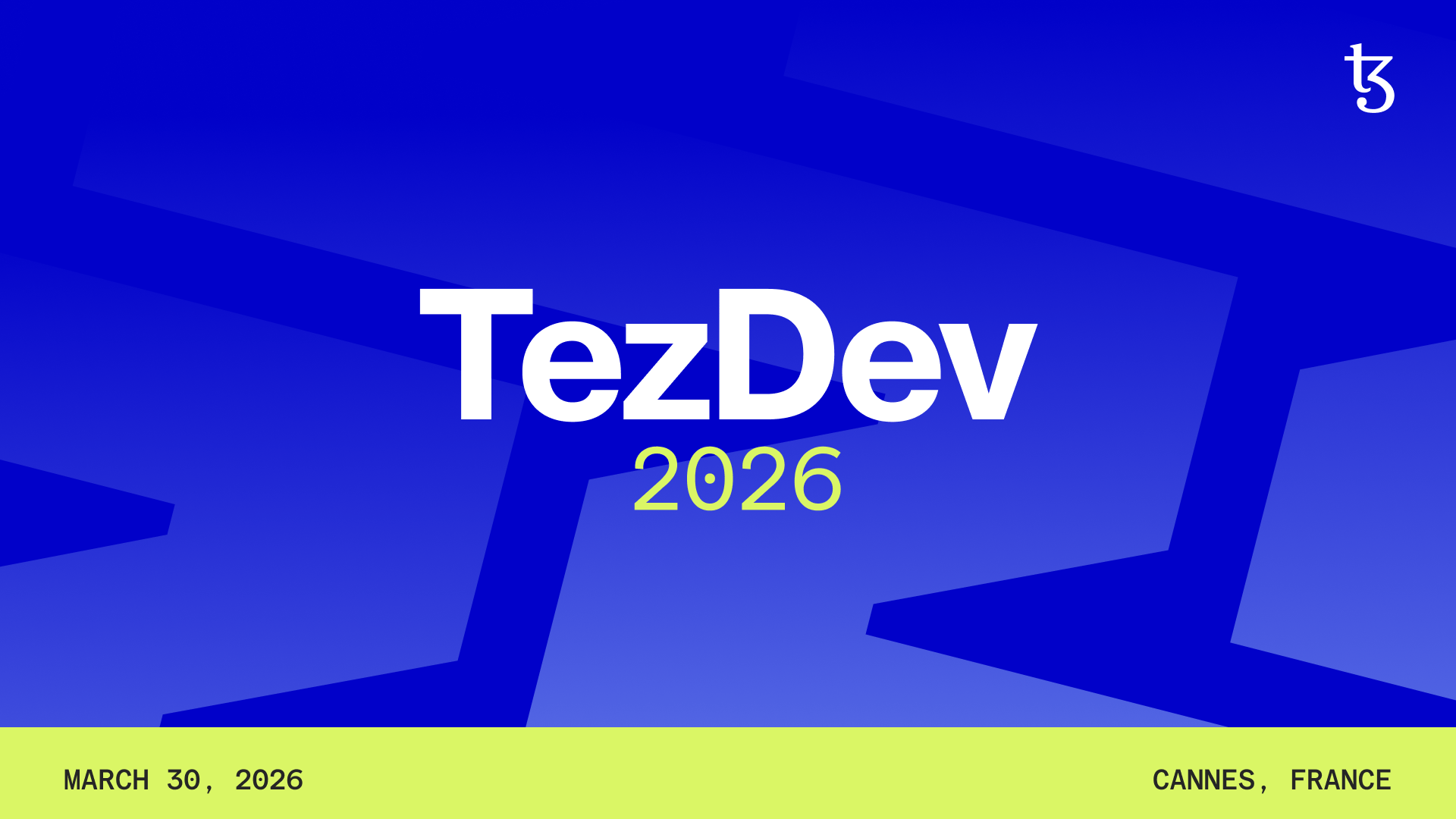
We’re giving first details exclusively to you, our loyal subscribers, more information will be revealed in the near future but save the date for Tez/Dev 2026!
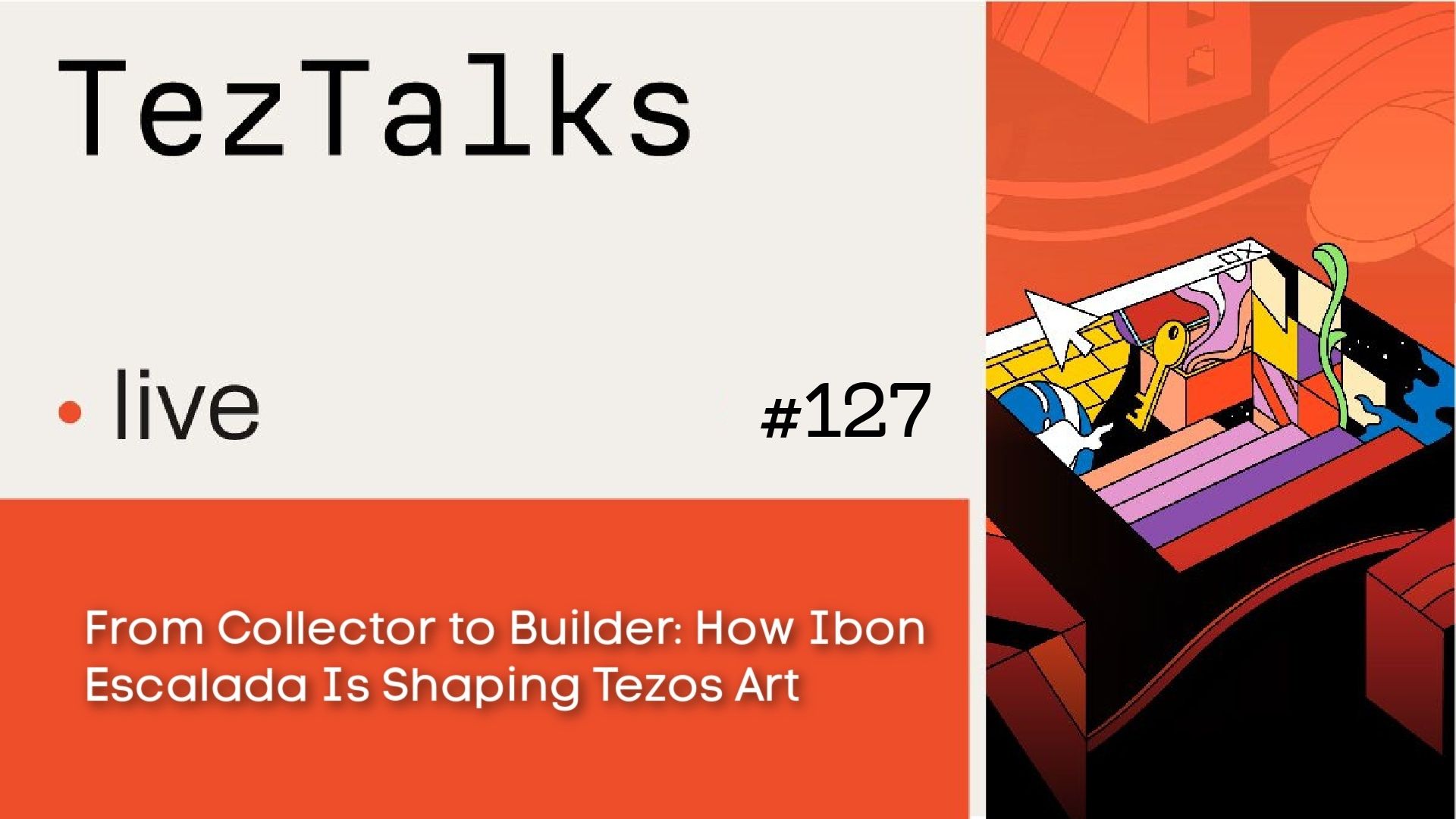
🔴 Now Streaming: How Tesserart Is Rethinking Tools for Tezos Artists
This week on TezTalks Live, host Stu sits down with Ibon Escalada, developer at Tesserart and longtime Tezos art collector, to explore how artists can take greater control of their work in the blockchain art space.
Ibon’s path into Tezos began as a collector drawn to the work, the artists, and the culture that formed around them. Over time, that curiosity turned into building.
In this conversation, he shares how those experiences shaped Tesserart and its Storefront platform, created to help artists bring their work on-chain without unnecessary friction.
Watch the full episode on YouTube.