- The Baking Sheet
- Posts
- The Baking Sheet - Issue #293
The Baking Sheet - Issue #293
Bitnomial Launches First U.S.-Regulated Tezos Futures

This week’s edition brings together a few threads that have been building quietly over the past several months and are now very much in the open. On one end, we have a clear snapshot of where Tezos stood heading into the end of 2025, with the Tezos Foundation’s bi-annual report laying out progress across protocol upgrades, Etherlink, capital markets, gaming, and arts programming. On the other end, we’re seeing new signals of market maturity and user protection showing up in practical ways.
It’s a week that blends reflection with forward motion. The report gives context on how upgrades like Seoul and the path to Tallinn fit into a larger arc, while new developments like regulated XTZ futures in the U.S. and safer tooling on Etherlink point to where usage is heading next.
Nothing here feels flashy for the sake of it. Instead, it’s about substance, accountability, and infrastructure steadily coming into focus. That combination is what makes this week worth sitting with.
Let’s dive in.

Tezos Foundation Biannual Report Shows a Network That Kept Shipping
Coming off a stretch where the protocol itself was moving faster and the ecosystem was widening its reach, the Tezos Foundation’s biannual report for July through December 2025 reads less like a retrospective and more like a progress log. It captures a half year where multiple tracks moved forward at once, from core protocol upgrades to capital markets, gaming, and cultural programming.
At the protocol level, the report looks back on the activation of Seoul, which introduced protocol-native multisigs, aggregated attestations, and one-click unstaking with automatic finalization. Those changes tightened consensus and made staking and shared custody simpler to use in practice. It also outlines what followed immediately after, with the Tallinn proposal setting the stage for six second block times, all-baker attestations, and the Address Indexing Registry that can reduce contract storage needs by up to 100 times.
On the scaling side, Etherlink continued to mature quickly. Two kernel upgrades landed in H2, with Ebisu increasing capacity and Farfadet pushing throughput to 27 MGas per second while unlocking sub-50 millisecond instant confirmations. Those changes were paired with deeper tooling and infrastructure support, including eligibility for the Google Cloud Web3 Startup Program and new analytics via Dune.
The report also highlights how activity clustered around real usage. Gaming emerged as the dominant growth driver, accounting for more than 80 percent of active users across the ecosystem in the second half of the year, with games consistently ranking among the most used applications. On the DeFi and capital markets side, deployments from Curve Finance, Gearbox Protocol, and Morpho helped push Etherlink TVL above $83 million at its peak, while Apple Farm Season 2 surpassed $125 million in total value secured.
Real world assets continued to be a defining theme. Uranium.io launched the first live uranium spot pricing oracle and enabled USDC borrowing against xU3O8, while Spiko Finance saw its on-chain money market funds approach $11 million in TVL. Together, these efforts reinforced Tezos’ position as a place where non-traditional assets can move on chain with real utility.
Arts and culture remained a steady pillar throughout the period. Art on Tezos events in Berlin drew hundreds of artists and visitors, new museum and exhibition partnerships were renewed, and first-time artists released work on Tezos through major fairs and institutions. At the same time, wallet and UX improvements like shielded transactions in Umami Wallet showed continued attention to everyday user experience.
From a resourcing standpoint, the Foundation approved funding for 20 new initiatives totaling $3.1 million during the period, closing the year with approximately $530 million in assets across cash, BTC, XTZ, and stability reserves. The picture that emerges is one of steady execution rather than singular bets, with protocol work, ecosystem growth, and institutional engagement all advancing in parallel.
For anyone looking to understand how the second half of 2025 actually unfolded on Tezos, the full report pulls those threads together in one place and makes clear how much ground was covered in six months.
Stats & Facts: Tezos in H2 2025
To put the second half of the year into perspective, the report highlights a number of concrete milestones across protocol, usage, and ecosystem growth:
Protocol upgrades
- Seoul activated in September 2025
- Tallinn proposed as the 20th protocol upgrade
Scaling and infrastructure
- Etherlink shipped two kernel upgrades:
- Ebisu: capacity increased from 8M to 14M gas per block
- Farfadet: throughput boosted to 27 MGas per second and instant confirmations enabled
- Builders became eligible for the Google Cloud Web3 Startup Program
- New analytics and dashboards launched via Dune
DeFi and capital markets
- Etherlink TVL peaked above $83 million in November
- Apple Farm Season 2 surpassed $125 million in total value secured
- Deployments from Curve Finance, Gearbox Protocol, and Morpho
Gaming
- Gaming accounted for over 80% of active users across the ecosystem in H2
- Games consistently ranked among the top applications by user activity
Real-world assets
- Uranium.io launched the world’s first live uranium spot pricing oracle
- USDC borrowing enabled using xU3O8 as collateral
- Spiko Finance money market funds reached roughly $11 million TVL
Arts, culture, and UX
- Art on Tezos Berlin hosted 500+ artists and 700+ visitors
- New institutional art partnerships and exhibitions announced
- Umami Wallet added shielded transactions for private tez transfers
Foundation activity
- 20 new initiatives funded between July and December 2025
- $3.1 million approved in new funding
- Approximately $530 million in assets held as of December 31, 2025
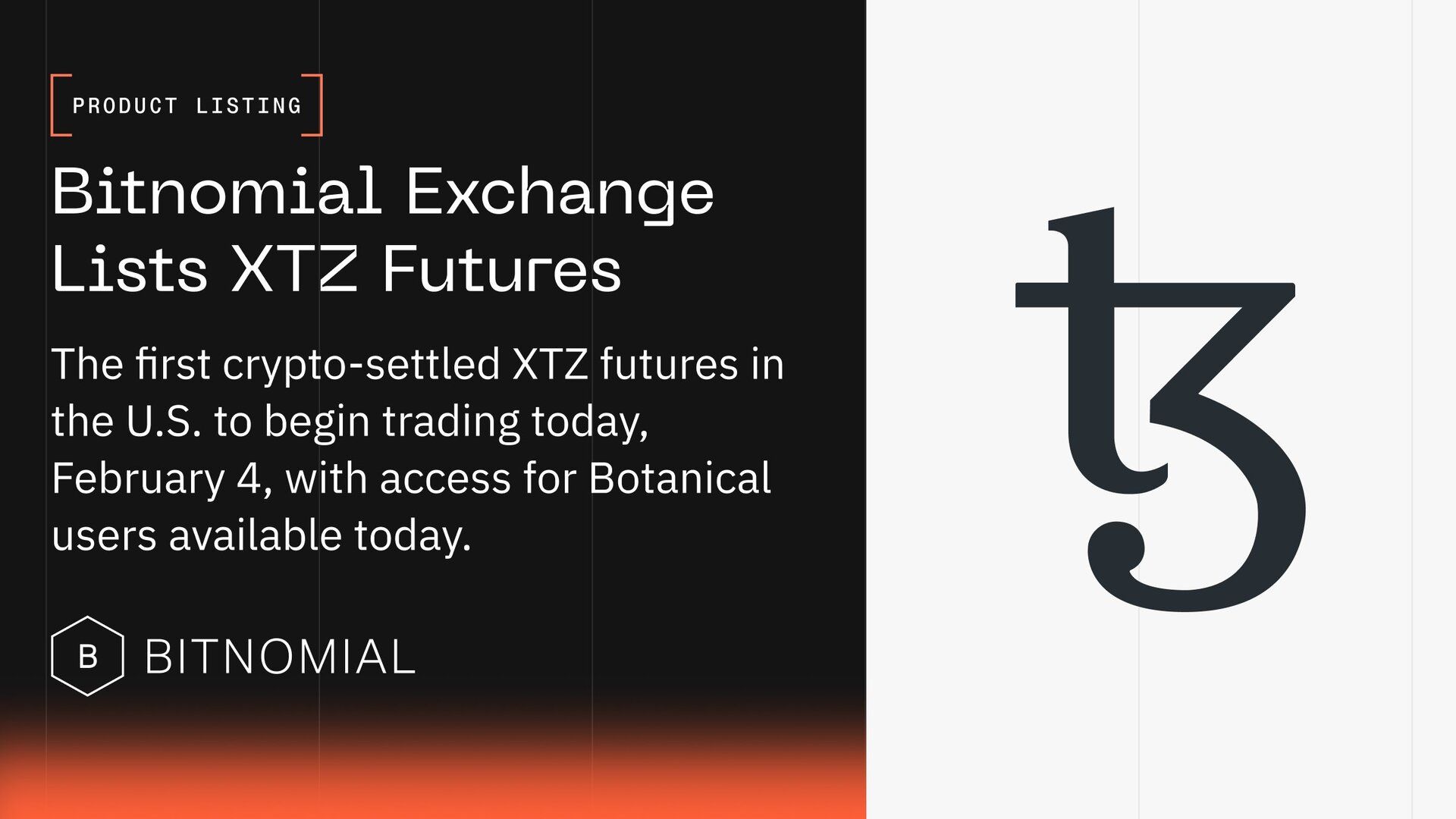
Bitnomial Launches First U.S.-Regulated Tezos Futures
After a second half of 2025 defined by steady protocol execution, expanding real-world asset use cases, and growing institutional infrastructure, Tezos is now seeing that momentum translate directly into regulated financial markets.
This week, Bitnomial announced the launch of Tezos (XTZ) US Dollar futures, marking the first time XTZ futures are available on a CFTC-regulated exchange in the United States.
The contracts went live on February 4, 2026, and are available to both institutional and retail traders. They offer a regulated venue for price discovery and risk management, with the added flexibility of posting either crypto assets or USD as margin. For Tezos, this marks a meaningful step deeper into traditional market infrastructure, where futures play a central role in liquidity, hedging, and institutional participation.
Bitnomial’s president, Michael Dunn, framed the launch as a natural fit for the network’s trajectory. He noted that Tezos represents “resilient institutional-grade infrastructure,” and that crypto-settled futures allow for real price discovery alongside portfolio margining across digital assets. Importantly, a CFTC-regulated futures market with an established trading record also satisfies a key requirement under the SEC’s generic listing standards for spot ETFs, adding broader market relevance beyond derivatives alone.
From the Tezos side, Arthur Breitman highlighted the structural significance of the move. U.S.-regulated futures markets underpin commodity trading, and their arrival for XTZ signals growing maturity. With regulated instruments in place, price discovery becomes more robust and risk transfer more efficient, both of which support deeper institutional engagement.
This launch also expands Bitnomial’s Crypto Complex, which already offers one of the widest selections of digital asset derivatives in the U.S. Unlike traditional futures venues that rely on cash-only margining, Bitnomial’s delivery-settled contracts can be margined with digital assets, improving capital efficiency for traders managing multi-asset crypto portfolios.
XTZ futures are now live through Botanical, Bitnomial’s retail trading platform, with plans to introduce perpetual futures and options in the future. For Tezos, the debut of U.S.-regulated futures is less about short-term trading headlines and more about long-term positioning. It places tez alongside other assets that have crossed the threshold into mature market infrastructure, reinforcing Tezos’ role in regulated, institutional-grade finance.
This Week in the Tezos Ecosystem

Revoke Cash Brings Approval Management to Etherlink
As Etherlink continues to move faster and attract more on-chain activity, the conversation naturally shifts from just speed and scale to something equally important: user safety.
This week, our friends at TZAPAC announced Revoke Cash is now supporting Etherlink, giving users a simple way to review and revoke token approvals directly on the Tezos EVM layer.
Revoke Cash is widely used across EVM ecosystems to help users reduce risk by cleaning up old or unnecessary token permissions. Over time, approvals can accumulate from DeFi apps, games, and experimental contracts. Even if you stop using an app, those permissions often remain active, quietly expanding your attack surface.
With Etherlink support now live, users can:
Review all active token approvals on Etherlink
Revoke outdated or unused permissions in one place
Reduce exposure to malicious or compromised contracts
Maintain better wallet hygiene as on-chain activity grows
This addition lands at a good moment. Etherlink has seen rising transaction volumes, faster confirmations, and expanding DeFi usage. Tools like Revoke Cash add an important layer of confidence, especially for users interacting frequently with smart contracts or experimenting with new applications.
If you’ve been active on Etherlink, it’s worth taking a few minutes to check your approvals and clean things up.
Events
Big conference days tend to start fast, and ETHDenver is no exception. To make the morning a little easier, the Tezos Breakfast Club is back with a relaxed meetup designed to fuel conversations before the day gets busy.
If you skipped the hotel breakfast or just want a familiar place to land, this is a low-key stop for the Tezos community to connect over coffee and pastries before heading into the conference.
What to Expect
Complimentary coffee and fresh baked goods
Casual conversations about Tezos, Etherlink, and what people are building
Exclusive giveaways for attendees
A friendly starting point to ease into the ETHDenver schedule
The Breakfast Club is meant to stay simple. No panels, no presentations, just a chance to catch up with builders, artists, and ecosystem teams in a comfortable setting.
Event Details
Location: The Wild, 1660 Wynkoop St Suite 100, Denver, CO
When: During ETHDenver week
Registration: Spots are limited, so early sign-up is recommended
Grab a coffee, grab a pastry, and start your ETHDenver week with good conversations and familiar faces.
One More Thing…
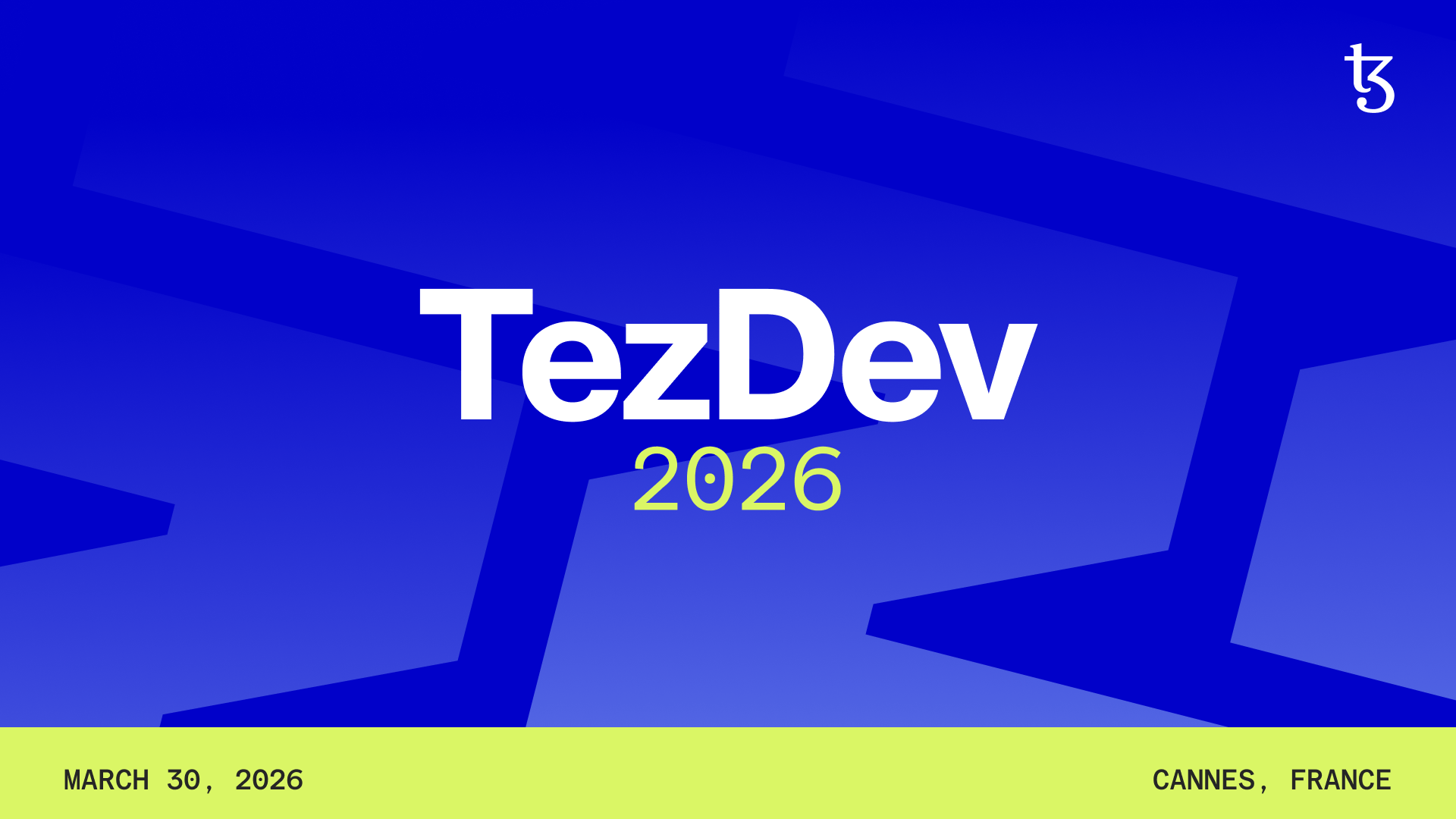
We’re giving first details exclusively to you, our loyal subscribers, more information will be revealed in the near future, but save the date for Tez/Dev 2026!
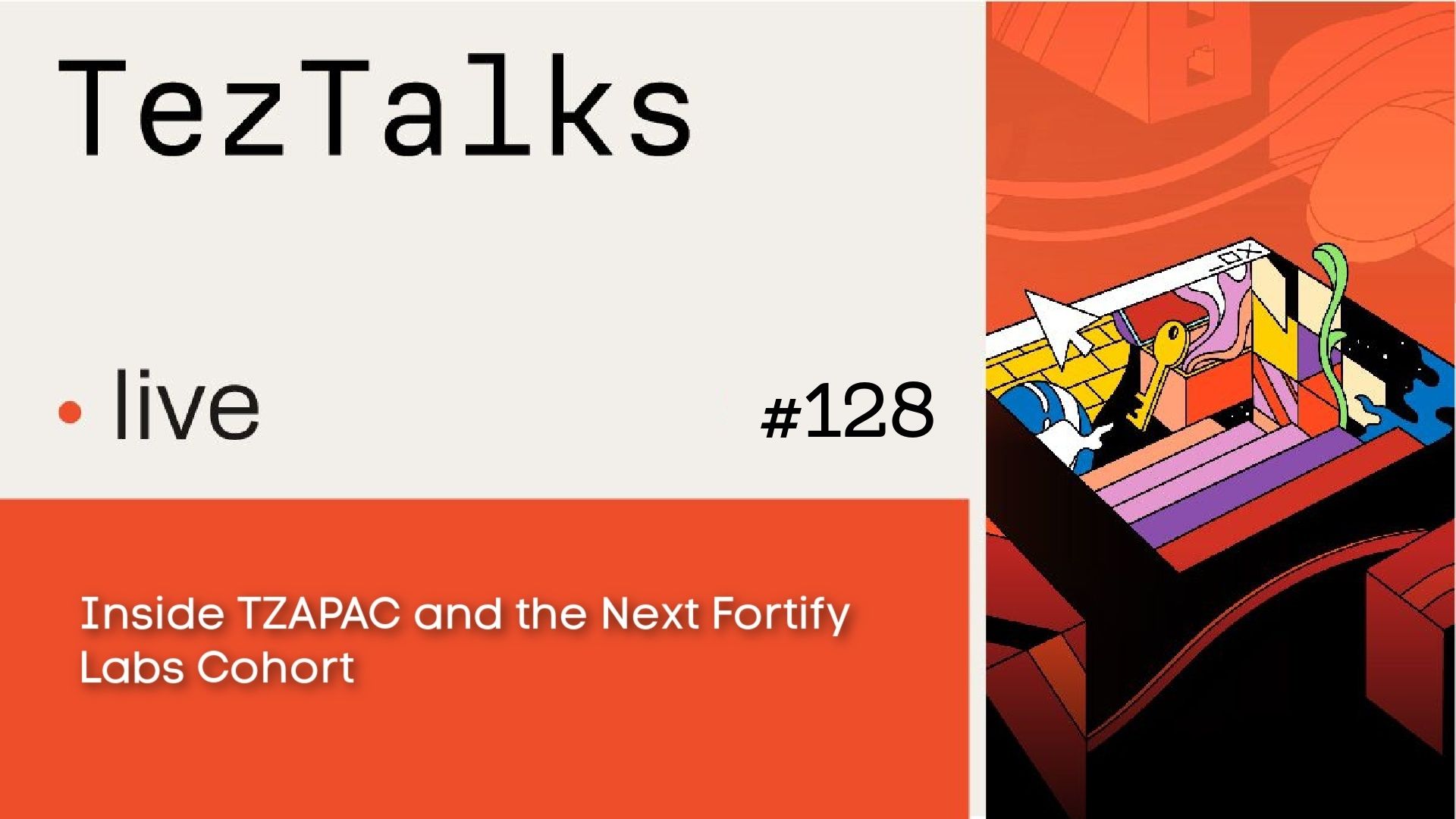
🔴 Now Streaming: Inside TZ APAC and the Next Fortify Labs Cohort
This week on TezTalks Live, host Stu is joined by Imran Haqeem, Deputy Head of Programs at TZAPAC, for a wide-ranging conversation about how Tezos continues to take shape across the Asia Pacific region.
Imran returns to share what the TZAPAC team has been working on as 2026 begins, from ecosystem programs and regional initiatives to the next cohort of Fortify Labs projects. Together, they explore how builders’ needs are changing, what kinds of ideas are emerging, and how hands-on support can make the difference between an early concept and a real product.
Watch the full episode on YouTube.